
-
UV-Oxidatie
UV-Oxidatie
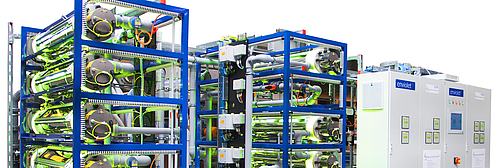
We combineren een volledig nieuw ontwikkelde UV-technologie met aanvullende chemische, fysische of biologische processtappen tot een innovatieve eenheid in afvalwaterzuivering.
Meer info -
Toepassingen en processen
Proces

Wij voeren alle oxidatieprocessen uit. Bekijk onze procesgroepen eens om te zien of het proces dat u nodig hebt er ook bij staat. Het voordeel van oxidatie is dat stoffen duurzaam worden afgebroken en niet alleen in een andere fase worden omgezet, zoals bijvoorbeeld bij verdamping of andere fysische processen.
-
UV-Desinfectie
UV-Desinfectie
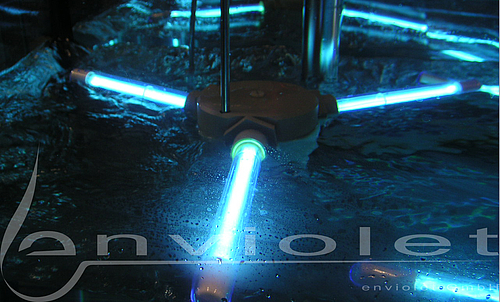
Wij zijn de enige producent, die in zijn Microspear® en Microfloat® UV-lampen aardingsdraden integreert, aangesloten op de FI-zekeringsschakelaar. Alleen daarmee zijn de UV-units, bij glasbreuk, elektrisch beveiligd.
Wij staan altijd een stap verder!
Meer info -
Service
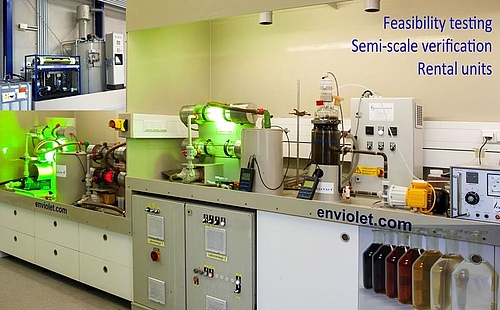
Ons laboratorium ondersteunt de klant in zijn zoektocht naar een economisch haalbare technische oplossing ook tijdens de ingebruikname moet die support leiden naar een snelle overgang in routinegebruik.
Meer info -
De Onderneming
De Onderneming
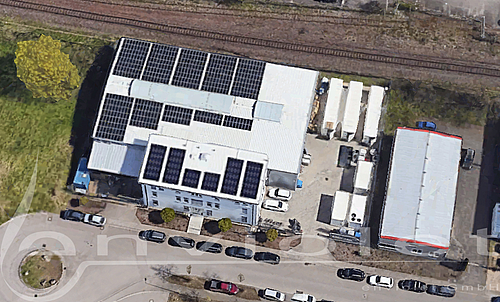
Sinds april 2012 produceert enviolet GmbH in een nieuw gebouw van de hoogste kwaliteit met een productieomgeving die optimaal is aangepast aan onze producten; Dit nieuwe gebouw is in 2016 opnieuw uitgebreid.
Meer info
FAQ on Enviolet Metal Recovery
What is the difference between the enviolet-palladium-recovery and other processes?
Palladium activator systems are usually based on colloidal Pd/SnCl2 or ionic PdCl2/SnCl2 bath formulations. Through UV oxidation we first crack the solution and then get a much better recovery-rate and efficiency. This improves the reliability and the return on investment significantly.
Is electrowining not always the first choice for palladium recovery?
No, not all activator systems can instantly be recovered by electrowining. The UV oxidation process ensures that the palladium is in a form that can either be recovered by electrowining or by ion exchange. Our selective ion exchange resin ESPD offers our customers the best recovery-rate-efficiency ratio.
What is the return on investment for a palladium recovery system?
Depending on the installation and palladium feed concentration, we usually achieve a yield of the investment within 4 and 7 months.
Does the enviolet system also work for diluted solutions like rinse water?
Yes, our system performs very well even in rinse waters with low concentration. Depending on the type of activator bath, a pre-UV oxidation might be necessary to make sure all the palladium is turned into ionic form and the tin is in oxidation state 4+.
