
-
UV-Oxidation
UV-Oxidation - to safe our clima!
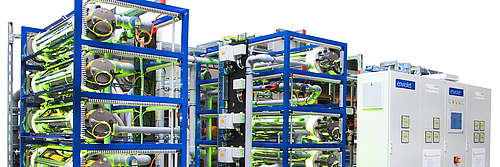
We combine a state-of-the art UV technology with additional chemical, physical or biological process steps to create an innovative unit in wastewater treatment.
More -
Applications and Processes
Processes

We offer a full range of oxidation processes. Take a look at our process categories to see if the process you need is listed. The advantage of oxidation is that substances are permanently destroyed rather than simply converted into a different phase, as is the case with evaporation or other physical processes.
-
UV Disinfection
UV Disinfection
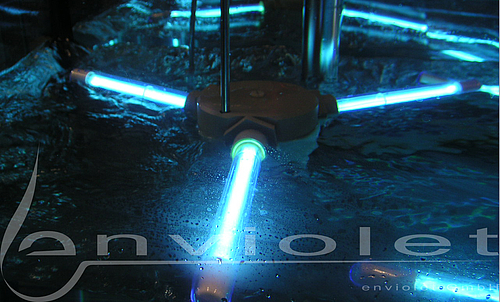
We are the only supplier, which equips submerged disinfection devices like Microspear® and Microfloat® with internal grounding for the built-in ground fault control.
This is the only way we can ensure that the devices stay electrically safe even in the case of breakage or damage.
Always one step ahead!
More -
Service
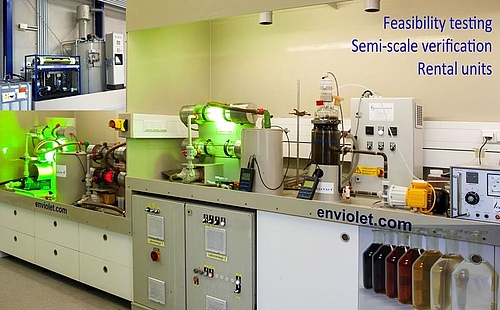
Our application lab helps customers to find a cost-effective technical solution and during commissioning, provides support for a quick transition to routine operation.
More info -
Company
Company
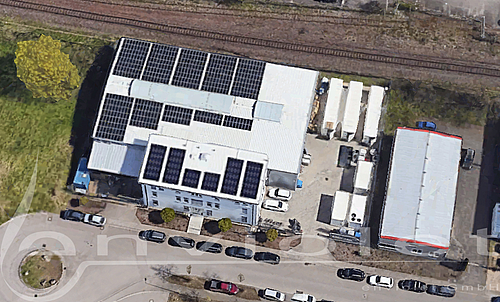
The enviolet GmbH has been producing high quality units since April 2012 in a new manufacturing process specially developed to supply the best and highly reliable products. 2016 and 2018 we expanded our capacities in Karlsruhe Factory.
More
UV-applications
Advanced Oxidation Processes (AOP)
Copper Electrolyte Recycling for Sustainable Plating Maintenance in Printed Circuit Board Production
Fundamentals and Challenges

In printed circuit board manufacturing, acidic copper electrolytes are used in electrolytic (galvanic) processes for plating in order to make non-conductive drill hole walls conductive and to build up the required copper layer thickness for conductive traces.
There are a variety of process types available for creating the desired conductive structures on printed circuit boards. These include standard processes such as panel plating (full copper plating), pattern plating (selective copper plating), and hybrid forms (semi-pattern plating). For particularly demanding printed circuit boards with fine conductor traces (High-Density Interconnection, HDI) or multilayer boards, there are also a number of important copper plating processes, such as plating through holes (PTH), blind via filling, through-hole filling, and conformal via plating.
The more complex the printed circuit board, the more extreme the physical and geometric requirements for electrolytic copper deposition. Inadequate plating immediately leads to signal loss, overheating, or total system failure. This applies above all to PCB types such as high-layer-count multilayer (HLC), any-layer HDI PCBs, IC substrates (package substrates), and rigid-flex PCBs.
In the electroplating processes used to manufacture these PCBs, the deposition behavior is specifically controlled via the electrolyte composition (organic additives) and the current waveform. These organic additives play a crucial role: they control the deposition behavior of the copper at the atomic level. Without them, the copper would preferentially deposit on corners and edges (where the current density is highest), leaving holes or vias incompletely coated.
For modern processes such as via filling or HDI manufacturing, three organic additives essentially interact within the electrolyte, regulating one another:
- Suppressor (inhibitor / wetting agent)
- Brightener (accelerator / gloss enhancer)
- Leveler (equalizer)
During copper plating in the electroplating bath, the electrochemical oxidation and reduction of these additives—particularly during pulse plating—result in the formation of a variety of organic substances, some of which cause significant side effects. These side effects lead to a decline in the performance of the copper electrolyte and an increase in coating defects.
UV Bath Treatment as a Sustainable Method for Recycling Acidic Copper Electrolytes
Proven UV oxidation for high production and quality standards!
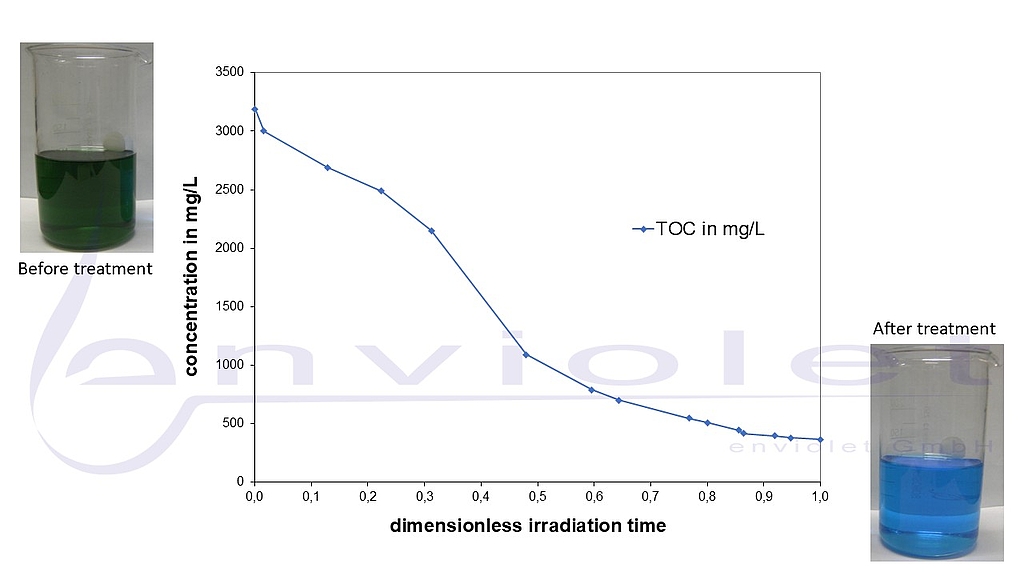
As the most effective method for removing organic contaminants resulting from the decomposition of additive systems, enviolet offers its UV oxidation systems, which have been proven in this field for decades.
The enviolet process breaks down the organic compounds in the electroplating electrolyte and largely mineralizes them. After UV treatment and the corresponding rejuvenation, an electrolyte with the properties of a fresh batch is once again available. This allows acidic copper electrolytes to be maintained continuously at a high level of production and quality.
UV-AOP technology is fundamentally applicable to all acidic copper electrolytes in printed circuit board manufacturing, as it is based on the universal mechanism of UV oxidation.
Conventionally, the accumulation of organic degradation products is compensated for by increased rinsing, regular activated carbon treatment, and ultimately by draining the bath and preparing a fresh batch. This results in higher volumes of wastewater, costs for disposing of spent activated carbon, and significant costs for preparing a fresh batch of electrolyte. Compared to conventional electrolyte maintenance with activated carbon, UV oxidation offers, in particular, high reproducibility of the treatment, sustainable removal of organic contaminants, and the possibility of continuous bath maintenance. Furthermore, UV oxidation can be largely automated and significantly reduces the workload on operating personnel, especially when compared to activated carbon treatment.
With UV oxidation, however, the electrolyte can be returned to the production bath once the relevant organic parameters have been adjusted.
This continuous renewal of the electrolyte contributes to consistently high bath quality and reproducible plating results, and enables a theoretically unlimited service life of the electrolyte (see also “A Method toward Infinite Bath Life for Acid Copper Electrolytes by Atotech”), which in practice is limited only by electrolyte drag-out.
Case Study Multek, Böblingen
Regeneration of pulse copper baths in printed circuit board manufacturing using UV recycling

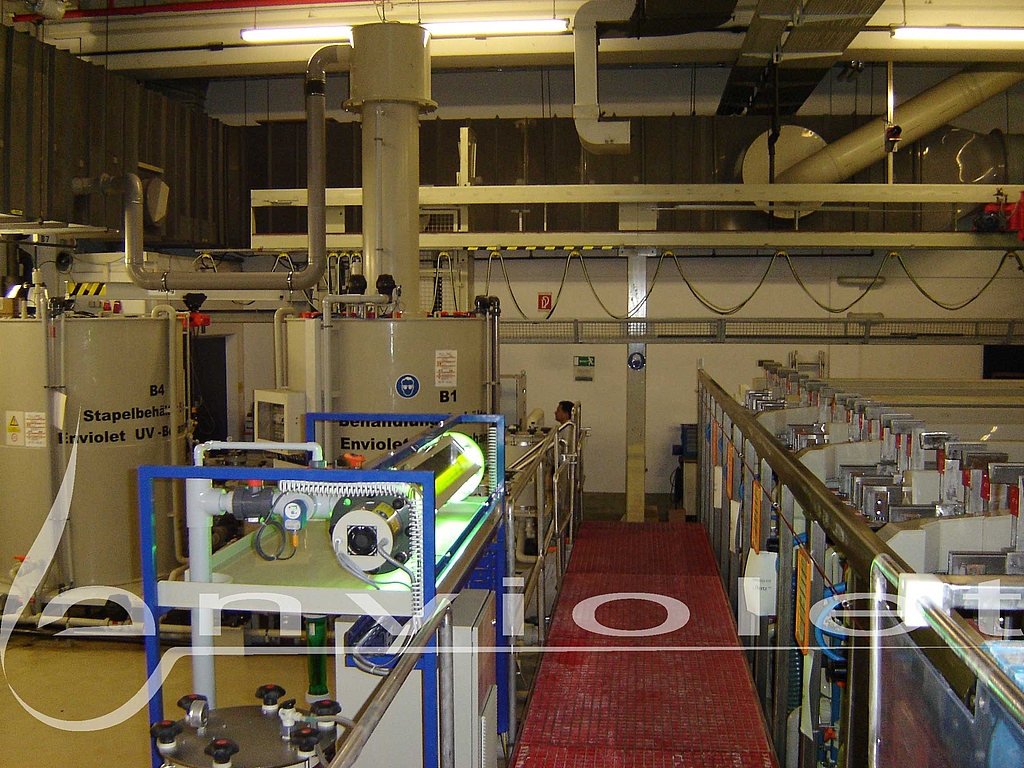
Multek Böblingen was one of the first companies to adopt and pioneer the industrial use of UV oxidation for the maintenance of acidic copper electrolytes. As early as 2003, the process was successfully introduced and implemented in production operations.
Even electrolytes that had been treated multiple times were able to achieve a microdistribution comparable to that of a fresh batch. By introducing UV oxidation, Multek laid the groundwork early on for consistent, high-quality, and environmentally sustainable production.
In addition to ensuring process and product quality, this approach also reduced operating costs and supported the requirements for modern production technologies and sustainability.
A detailed case study on this project can be found here.
Case Study Lincstech Circuit Singapore Pte Ltd
Modern Printed Circuit Board Production with enviolet® Technology
Following extensive laboratory testing and the initial purchase of equipment in 2019, all of Lincstech Circuit Singapore Pte Ltd’s plating lines were gradually equipped with enviolet systems for recycling and maintaining the copper electrolytes.
Lincstech produces, among other things:
- Advanced Multi-Layer Boards (MLBs) with up to 50 layers
- High-Density Interconnect (HDI) Boards
- Backplanes & sub-laminated boards
- Module substrates
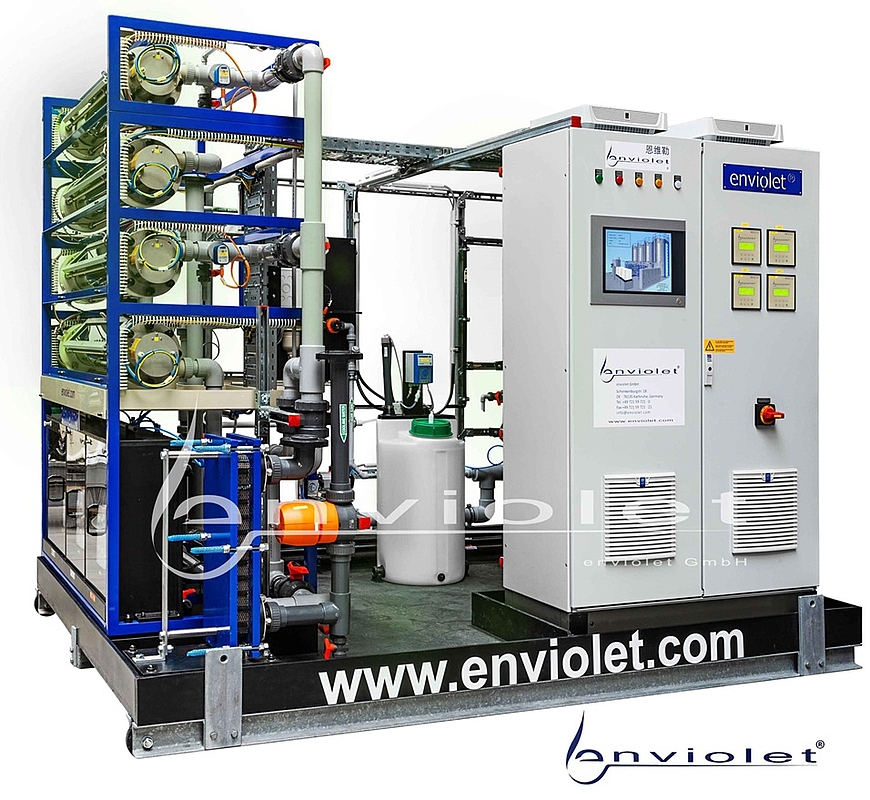
In total, over 100,000 liters of copper electrolyte for pulse plating at the Singapore site are continuously maintained within the required specifications. To achieve this, three separate, skid-mounted UV oxidation systems are in operation on different plating lines.
Depending on the composition of the treated electrolyte, a TOC reduction of 80–90% is achieved per UV oxidation cycle. The systems are PLC-controlled and operate in feed-and-bleed mode, enabling continuous maintenance and controlled renewal of the electrolyte in the plating lines.
What is copper bath recycling?
Copper bath recycling refers to the treatment and regeneration of used copper electrolyte through UV oxidation, so that it can continue to be used for electrolytic copper deposition. In printed circuit board manufacturing, this applies in particular to acidic copper electrolytes, such as those from pulse plating processes. The goal is to maximize the bath’s service life and to maintain the required bath quality at a consistently high level using enviolet technology.
Is copper bath recycling also suitable for pulse plating?
Copper bath recycling is particularly well-suited for pulse plating. In pulse plating, the steep ramps characteristic of the process place greater stress on the organic components of the bath, leading to the faster formation of undesirable byproducts that negatively interfere with the plating process. Pulse electrolytes must therefore be purified more frequently and more thoroughly.
Why does a copper bath need to be recycled or regenerated?
During the electroplating process, the breakdown of the additive system produces organic contaminants that can increasingly impair the electrolyte’s deposition performance. As their concentration rises, these contaminants negatively affect the quality of copper deposition and ultimately render the electrolyte unusable. enviolet offers UV oxidation systems for continuous electrolyte maintenance. The interfering organic compounds are specifically broken down, thereby regenerating the electrolyte and maintaining its high performance and quality over the long term.
Who uses the UV oxidation process?
This process is specifically designed for companies in the printed circuit board manufacturing and surface treatment industries that use acidic copper electrolytes to produce very high-quality and sophisticated products.
How can you remove unwanted organic matter (TOC) from a copper electrolyte?
UV oxidation can be used to efficiently remove unwanted organic compounds—measurable, for example, as TOC (Total Organic Carbon)—from copper electrolytes. In this process, the organic compounds in the electroplating electrolyte are broken down by enviolet’s UV oxidation and largely mineralized. The result is a recycled electrolyte that, after the parameters have been readjusted (chemical make-up), once again delivers the deposition performance of a new electrolyte.
How does copper bath recycling through UV oxidation work?
Enviolet uses a UV-based Advanced Oxidation Process (AOP) for this purpose. In this process, the copper electrolyte is treated with UV light. The UV oxidation breaks down the unwanted organic contamination. UV oxidation breaks down the unwanted organic contamination, while the copper electrolyte itself can continue to be used. In this way, the copper is not removed from the bath; rather, the disruptive organic byproducts are reduced.
What are the advantages of this method, for example, compared to treatment with activated carbon?
Compared to conventional treatment with activated carbon, UV oxidation offers significant advantages: It enables a significantly longer—theoretically unlimited—bath life, thereby minimizing bath waste and eliminating the need for completely new batches. At the same time, it ensures reproducible treatment results, lower operating costs, and a high degree of automation with reduced operational effort. Since no organically contaminated secondary waste, such as spent activated carbon, is produced, the process is also more resource-efficient and sustainable. This allows for consistently high electrolyte quality while reducing costs and environmental impact.
How is the UV system integrated into the production process?
UV oxidation can be used as a continuous bath maintenance process. The contaminated electrolyte is fed into the treatment process, where it undergoes UV oxidation, and is then returned to the production process.
When is copper bath recycling via UV oxidation particularly beneficial?
This is particularly relevant in situations where copper baths are operated continuously or intensively under high-quality requirements and in complex applications, and where organic degradation products accumulate over time. This applies, for example, to demanding pulse copper processes in printed circuit board manufacturing. The higher the consumption or the load on the bath, the greater the potential for continuous bath maintenance through UV oxidation.
Who uses copper bath recycling?
Copper bath recycling is used by manufacturers of high-quality components, such as multilayer printed circuit boards, where pulse plating must deliver a technically flawless copper layer even in areas where a bath with high dispersion is likely, such as in via filling or through-hole plating (THP).
Who supplies bathroom recycling systems?
Enviolet supplies equipment for bath recycling, and most manufacturers of high-quality printed circuit boards already use Enviolet equipment.
How large does the volume of the copper electrolyte need to be for bath recycling to be worthwhile?
In principle, any copper electrolyte can be recycled. In practice, systems are cost-effective for electrolyte volumes of approximately 10 m³ or more, depending on the additive system used. There is no upper limit, and some of enviolet’s customers use bath recycling in the form of the feed-and-bleed process for baths with electrolyte volumes of up to 400 m³. In this process, bath recycling ensures consistently high quality.
